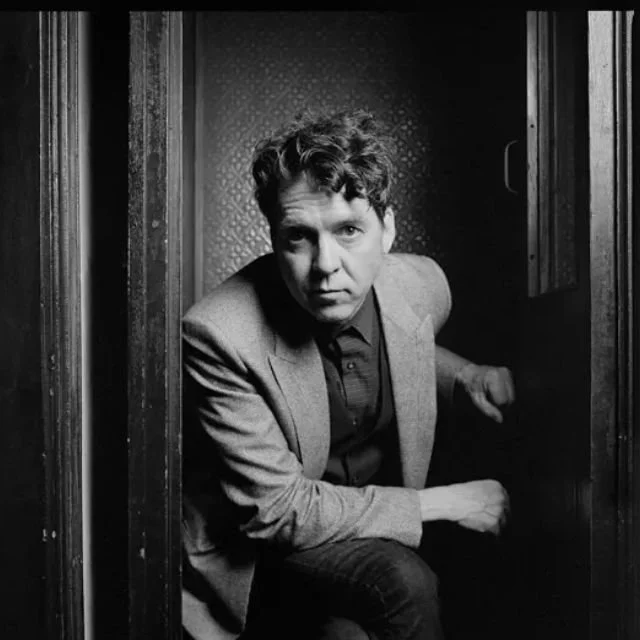

Kris Delmhorst has released 12+ records independently and via Signature Sounds, has written/performed and recorded with Mary Gauthier, Lori McKenna, Grant Lee Phillips, Peter Wolf (lead singer of J. Geils Band), and more, is critically acclaimed by The Boston Globe, LA Times, Pop Matters, and all your favorite songwriters, and has written for tv & film, as well as countless festivals all over the world. We talk with Kris about creative cycles, retreating, and the necessity of disappearing to make real art, trusting your career through slow seasons, motherhood versus touring, sustaining a two-songwriter household, reframing art as a service rather than ego, and so much more.
Get more access and support this show by subscribing to our Patreon, right here.
Links:
Click here to watch this conversation on YouTube.
Social Media:
All music written, performed, and produced by Aaron Shafer-Haiss.
Hey, and welcome to this week's episode of the Other 22 Hours podcast. I'm your host, Aaron Shafer-Haiss
[00:00:19] Michaela: and I'm your other host, Michaela Anne. And we are on episode 132, and this week we're featuring our conversation with Kris Delmhorst.
[00:00:27] Aaron: Yeah, Kris Delmhorst is a singer songwriter has been on our list for years. She's come recommended from so many of our guests from. Marcelli, who was on back on episode 14 to Lori McKenna who is here on episode 62. All points in between. And so it's wonderful to finally get Chris on here. She has been recording and releasing records for over 25 years.
A lot of them on the famed little indie label signature sounds that's also out of Western Massachusetts, and now also just completely independently by herself. She has recorded, written, and performed with former guests of ours, Mary Gosher, Lori McKenna, also Peter Moy and Grant Lee Phillips. She's married to another singer songwriter named Jeffrey olt, who we obviously asked that question like, what's that like having two songwriters to album cycles?
How do you guys navigate that? She's been critically acclaimed by all of the places and has written for film. She's written for tv. She showed up at all of your favorite festivals and she's just an incredible guest.
[00:01:26] Michaela: Yeah, and some of the highlights of this conversation for us were, we talk about the need to retreat and honoring that.
Retreat from our everyday life in order to kind of drop down and really connect and be able to write songs. The role of the songwriter and creative in our society and how essential it is that it's not a selfish act, that it's not about us. That difference between the inward artist versus the outward marketer, and she has this beautiful analogy that she takes from her yoga teacher, which translates into doing the work and the steps, trusting that the business and the career will take the shape it needs. I'll leave it to later in the episode to let Chris elaborate on that beautiful metaphor.
[00:02:10] Aaron: Yeah. And if you've listened to our show before, you know that we take, tips, recommendations, vibes from our community over on Patreon.
They all get advanced notice of the guests and so they can submit questions, they can submit topics that they'd like to hear our guests take on. And they also get the immensely deep soul fulfilling pleasure of knowing that they financially support this show and the continued production of this show.
So, If. Any of those things sound intriguing to you? There is a link to our Patreon in our show notes,
[00:02:40] Michaela: and if you're a visual person, this episode and all of our episodes are also available for viewing on YouTube. So without further ado, here is our conversation with Chris Hurst.
[00:02:51] Kris: Hi guys.
[00:02:52] Michaela: Hey. Hi.
[00:02:53] Kris: we always start with just a, How are you today? And where are you? Creatively
Well, I
[00:03:00] Michaela: I'm
today.
[00:03:02] Kris: this is a little bit of a crazy week because I have a daughter who's a senior in high school
[00:03:06] Michaela: Oh my gosh.
[00:03:07] Kris: and her first college application, like her early decision one is due in a couple days. So there's an ambient sense of mini freak out around me right now.
[00:03:16] Michaela: Mm-hmm.
[00:03:17] Kris: where I'm at. So I have not been thinking about music. Actually, I, that's not true. I thought about it a lot this morning. Anyway, and in, terms of my musical cycle, I had a record out in the spring and For me right now at this point in my life, like really majorly toward it.
I had a band out for multiple weeks. across the country which was amazing. And now I'm sort of on the backside of that arc where I'm not playing too much, I'm doing some of my other little local musical projects and some other stuff and um, of retreated very hastily back to mom mode because it's kind of a big year.
that's basically where I'm at right now.
[00:03:53] Michaela: Beautiful.
[00:03:54] Aaron: Yeah. I mean, Even in our world, having a full band out for multiple chunks of weeks at a time, that's a tangent.
[00:04:00] Michaela: That's a lot. Yeah.
[00:04:01] Kris: It's insane. Yeah. And it's a lot more than it was even the last time I did it, which was before the pandemic um, maybe like 19 or 18, I can't remember. I had a record that came out in 2020 and I had the whole band tour booked and everything, and then obviously that didn't happen. so it's been a while and just it's so different.
Even from then, just the amount of, not only all the stuff, like getting the tours put together and hiring everybody and sorting the travel, and paying for the travel and blah, blah, blah, but just like the sheer volume of promotional stuff that you have to do.
just continues to balloon, I was good and cooked by the end of the spring,
[00:04:37] Michaela: You've been doing this for 25 years about, have you,
so even in the span of five years, you're talking about the change. but in what ways have you seen it change for better or worse since you started out doing this?
[00:04:52] Kris: Yeah, it is crazy to think about how different, was, I think I was first started doing tours of any kind in the late nineties. it was the same agent that I have now.
we've been together the whole time.
[00:05:04] Michaela: Amazing.
[00:05:05] Kris: come to think probably the longest relationship in life.
[00:05:08] Michaela: Yeah.
[00:05:09] Aaron: Mm-hmm. And so we'd book the tour. I would go to Kinko's copies in Harvard Square after my show at 'cause it was 24 hours and everyone would be there after the show. We'd make our little postcards, we'd xerox them, we'd mail them, and then we'd hope for the best. And we'd go on tour and like people would show up or they wouldn't, that was it.
[00:05:26] Kris: And the promoters were in charge of getting people to show up. It's just like very simple.
[00:05:31] Michaela: Wow.
[00:05:32] Kris: I know. It's crazy to even think about that right now,
[00:05:36] Aaron: I mean, even just the sentence promoters, were in charge of getting people to show up.
[00:05:40] Kris: right?
[00:05:40] Aaron: It's literally in the
name, of their job description. the job of course there are some promoters who are great and thank God for them
Mm-hmm.
[00:05:48] Kris: but there's also a lot of the thing of it's a week out and we've sold 15 tickets, do something.
[00:05:52] Michaela: Mm-hmm.
[00:05:53] Kris: That email from the promoters
like,
[00:05:55] Michaela: Mm-hmm. Yeah.
[00:05:56] Kris: okay.
[00:05:57] Aaron: Yeah.
Yeah, yeah, it could be a we thing.
[00:06:00] Kris: exactly. I Let's do something together.
I mean, it is cool to be a little bit involved. there was something, I don't know, I think about us at that time just these like space travelers. 'cause we also didn't have cell phones
[00:06:11] Michaela: Mm-hmm.
[00:06:12] Kris: the internet.
So you're just kind of like wandering about to your shows, what will happen? You know it's so funny. we had a lot less information and obviously that's A downside, but there's also kind of just like a cleanness, just a simplicity to it that I do find myself missing. Yeah.
[00:06:26] Michaela: Yeah. I can't imagine what it would be like to be on tour and not have a portal into seeing what everybody else is doing back home or on their tours.
What, whoa. Their show looks super packed and I now feel even worse about my show that didn't sell as well as I hoped last night.
And
the reality is that like, we don't actually know how packed that show was. Like we are granted access to more information, but also more, farce, would that be the correct way to use it? Like mm-hmm. Yeah, so I saw recently Katie Pruitt, who's a young singer songwriter.
she just did a tour and she posted beforehand her actual ticket sales and she did this whole post that was like, okay, I've never made money on a tour. I've never come home from a tour with any money. I'm told the only way I can turn a profit on this tour is if I sell out these shows.
And like, this is where my tickets are at like two weeks out and did an update one. I think it's brave when people do that because there's so much about trying to keep up the farce of like.
[00:07:33] Kris: look like you're crushing
[00:07:34] Michaela: Yeah. Mm-hmm.
And Katie's had massive opportunities like touring with Brandy Carlisle and the festivals she's played and she's showing, like some places she had only sold 15 tickets in a room with a 50 cap, and like others were at a hundred but like all of them were under like two, 300 cap rooms. And that's just really informative and helpful to translate oh, okay, I'm actually not an epic failure if I only sold 40 tickets because the proportions are like, these people who have this bigger machine or these bigger opportunities are also only selling that in some of these markets.
So
what that does to our psyche to then be able to fully perform and also like enjoy what we're doing, I think is a very, pervasive challenge for a lot of artists in today's world.
[00:08:25] Aaron: I just I just want to go and add a note to what you were saying about Katie and about like the, oh, maybe I'm not an epic failure because of all these people with the machine.
I think like even more than that is that no matter the machine, it's like we as the musicians are not the epic failure, the system. There's some disconnect in the whole system between putting music out, having a team behind you, having a push behind you, and then like people actually coming into shows.
It's an epidemic that plagues, I think everybody across the board, unless you happen to be Taylor Swift.
[00:08:52] Michaela: Yeah. Or
[00:08:53] Aaron: there's such a separation. It's like you're either selling stadiums or like hopefully you can buy a coffee. You know,
it's like
[00:09:00] Kris: Yeah. The middle is definitely carved out, from how it used to be. Yeah, for sure. for me, I don't think it affects, certainly not when I'm on stage.
Like I'm not thinking about that
[00:09:09] riverside_aaron_+ michaela_raw-synced-video-cfr_the_other 22 hours _0461: Mm-hmm.
[00:09:09] Michaela: Mm-hmm.
[00:09:10] Kris: Even more than ever before, I feel like the time of the actual playing of the music is like the refuge from the rest of
[00:09:17] Michaela: Mm-hmm.
[00:09:18] Aaron: Mm-hmm.
[00:09:18] Kris: and I mean like the other 22 hours which are sort of laid in with bullshit.
Not entirely, but like, you
[00:09:23] Aaron: it is there.
[00:09:24] Kris: A lot, plenty of it. And then like, I mean, it's always feels so surreal how small portion of your time, you're actually spending doing that thing, which is what worth it enough to make us all keep doing this insane job,
[00:09:36] Michaela: Mm-hmm. I know? I think about how that small amount of time, I think it's such a testament to. The magic of music and sharing and connection, because this year, the only shows I've done, I've been like carrying our baby on my back to them
and like, we've done a few where we've gone as a family, which is very different when Aaron's there, but a few of 'em, a handful, like three different weekends I've just flown with the baby and then had people help me there.
But like I've thought about the moments when I'm like trying to like get into a hotel with a suitcase merch, suitcase, a stroller, a baby in a guitar, and I'm like, this is physically actually not really possible. And I'll be like, I'm doing this all for like a 30 minute opening set. And still every time I'm like.
That was totally worth it.
Like,
[00:10:33] Aaron: yeah.
[00:10:34] Kris: I was in that phase touring with the baby was a little less tapped into that,
stuff.
Was definitely more of a survival situation and I felt like I was sort of only half there for a little
[00:10:47] Michaela: Mm-hmm.
[00:10:48] Kris: for the, I have one kid, but I toured a lot and my husband, Jeffrey Fa called
[00:10:52] Michaela: Mm-hmm.
[00:10:52] Kris: Songwriter too.
And mostly we toured separately, but we occasionally toured together. And when our daughter was a baby, we toured together basically from. When she was about six months old until the day before she turned two, because then you have to buy them a seat
[00:11:04] Aaron: Oh yeah.
[00:11:05] Kris: came home from our last tour the day before her second
[00:11:07] Michaela: did we,
[00:11:08] Aaron: we pretty much did the same from, from
[00:11:09] Michaela: Europe.
[00:11:09] Aaron: We were in Europe and Mikayla literally had to tell our management like, we can't add any more shows.
We, we just can't. Nope.
[00:11:15] Kris: Exactly. so we were touring a lot together and that I mean it was great. It was still exhausting. But also I did a few where I just flew to the west coast with my and, you know, sorted it out. And I definitely remember I have this very clear, memory of like. pulling up to my motel and it was like up two stairs to my room and I had like, kid asleep in the car seat and the guitar and the suitcase. So I was like, there's no,
[00:11:37] Michaela: Mm-hmm.
[00:11:38] Aaron: Yeah.
Mm-hmm.
[00:11:39] Kris: it was a relief to get past those first couple years and feel a little bit more present on stage.
I felt like I was, not completely, but like definitely partially sort faking it or just going through the motions for a while
[00:11:50] Michaela: Mm-hmm.
[00:11:51] Kris: a lot for one person and brain, and heart to tend to at once. It's a lot.
[00:11:55] Aaron: Definitely. How was your relationship with your creativity at home during that time?
[00:12:01] Kris: I didn't write a song for about a year and a half after I had my daughter. And that obviously is one of the things that we're all terrified of when we are gonna have a kid. And I was like well, it's true.
[00:12:12] Michaela: Mm-hmm.
[00:12:12] Aaron: Oh, yeah.
[00:12:13] Kris: and then I think she just started sleeping through the night and then everything started to be okay again.
I think it was more sleep deprivation than anything else. But, it has been sort of an evolving, I mean, she's 17 now with, we've been through a lot of different phases with it. It's still the easiest for me to write. Really right when I'm not here. I do a couple of, songwriting retreats during the year that kind of happen regularly.
And then I usually will just go away on my own and Jeff will do it sometimes too. But I definitely do it once or twice a year, just like get some little Airbnb, like hut and just hole up and get all the way in that brain because it's just really hard to switch back and forth. And I've I never thought I would be able to the kind of person who was like, oh, I have an hour and 15 minutes.
I'm gonna, you know, write a song or whatever, do my stuff. And then of course you do adapt and you do figure out how to do a version of that,
[00:13:02] Michaela: Mm-hmm.
[00:13:02] Kris: it's still not the same as just like. Going all the way inside and like losing track of time and space and everyone else and so I still really need that.
The way I write. I need to kind of get to that zone at least a few times a year. And then that seems to work. And then I can kind of like chip away and finish things and, do all the other little parts when I'm home in my little bits of time.
[00:13:23] Michaela: Yeah. I progressively find it harder and harder to write at home.
even if there aren't any kids around, there's so many things to do.
[00:13:31] Aaron: like,
there's remnants of kids.
[00:13:32] Michaela: Yeah.
Like, yeah. Like, It's such a gift when I, like an idea pops into my head. But coming up in the last several years I've always loved going on retreats or going away even before kids,
but I think there was a part of me that kind of felt like self-judgment of like, oh, am I being so precious?
And kind of like, Ooh, I'm an artist and I have to go retreat to be able to write. Now I'm, studying depth psychology of creativity in a master's program and from like Carl Young's psychology theories. And there's a deep psychological practice and belief in the necessity of retreating and being quiet with yourself to channel creativity, but also to just connect with who we are and connect with our psyche away from all of the outside relationships and messages that can cloud or pull us in different directions and really align with well, what am I wanting to say?
And who am I in my deepest essence versus, I'm a mother, I'm a wife, I'm a writer, I'm a performer. So it's encouraging my commitment to it of like, no, you're not being selfish or hoity-toity to be like, I need to go away to create. Mm-hmm. It's really
essential.
[00:14:52] Kris: job. That's our role in the world is to go there because not everyone gets to go there. It's hard. this came to be very clear to me when I had a little baby and I was completely in that mode of like, so kind of overwhelmed and just dealing with what was right in front of me all the time.
Jeff and I were driving up to a festival in Vermont. We had her with us, and we, he put on this Greg Brown record I'd heard 600 billion times. And he put it on and I just burst into tears and it just like, hit me so hard at that time. And what I realized was that it's because I wasn't accessing and because I have loved this sort of privileged artist's life where I get to go there all the time.
It was a new thing for me that like, I hadn't really gotten down into any of the deeper emotional layers lately because I had just been doing all this other shit and just dealing with like, needs of other people and just basic needs of myself and, that was I think the first time I really understood what we're for, like what our actual job is.
What the job is, not just like, I'm writing songs 'cause I have the urge to write songs, but it's like we're writing songs about whatever our own life or feelings or imagination or whatever, but like what we're offering people isn't even really so much of that. It's pathway, our job is to like open up. The places that they don't have the time or the bandwidth or the inclination to access on their own,
[00:16:07] Michaela: Mm-hmm.
[00:16:07] Kris: really, really, really important. this is the pep talk I give myself whenever I'm having the like, oh, what is, what am I doing for the world?
Kind of thing.
[00:16:14] Michaela: Mm-hmm.
[00:16:15] Kris: Enough to do for the world, but it's a really big important thing that people need,
[00:16:19] Michaela: Yeah.
[00:16:19] Kris: and it's why music is part of every ceremony, like every ceremonial kind of
[00:16:23] Michaela: Mm-hmm.
[00:16:23] Kris: like it opens up the doors between the sort of like day to day doing my thing into like the more mysterious layers
[00:16:31] Michaela: yeah, no, I think it's incredibly important in one of the missions, I guess, of this podcast, and also I feel like in our lives, increasingly over the last few years as we've gotten older and become parents is kind of that we were just talking to Amy right now and she said the phrase, lobbying for creativity.
And I feel like it's going to be increasingly important for all of us who do tap into it to honor that this isn't a narcissistic, selfish endeavor and all these other things that make it kind of, that feed that idea of like apps and streams and views and whatever,
that it's this deeply spiritual practice that we need for ourselves and also society needs.
We all need it. Exactly for the reason that you said, if it helps, it reflects back for people when they don't have the bandwidth or the moment or whatever to be able to access it.
[00:17:26] Aaron: to me, like where the rub really comes in is the whole, system and all of that, but like for us to be able to have the time and space to access those deeper emotional layers takes an audience and at least some kind of infrastructure that provides us with like the financial and schedule freedom to make space for that and to get our music out there.
That is where it starts to become this conundrum inherently because of like I guess the algorithm just to use a word like it turns it into this kind of narcissistic thing because that's what gets in front of people and that's how it sees people. And it, at least for me, and I don't release things myself.
I help other people release things. see that a lot where it's like this rub of okay, I'm doing this deeply personal thing that is in service, that is open-hearted and inviting. And then I have to, get it out and, ah, and this is, and try to sell it and sell it. And like,
and you inherently had to be like well, look at me here. Look, at this offering.
And it's,
[00:18:24] Kris: I think that that's just the central tension of being any kind of artist is like the making of the thing and the selling of the thing. And the selling of the thing now is pretty, outta hand the way it works now. And it's bonkers, but like the kernel of it is like.
being two completely different people,
[00:18:41] Michaela: Mm-hmm. Yeah.
[00:18:42] Kris: to have those two different kinds of person in one person. And there's a lot of artists who can't do that thing,
[00:18:49] Michaela: Mm-hmm.
[00:18:49] Kris: Just can't. And I, I don't think it's easy for most of us, 'cause we're mostly sort of souls or whatever.
Like, it just doesn't come naturally to most artists to try to, and go out and like, round people up and talk about how great you are. Like, know, we all know people who really can't in this kind of world, no one's gonna see what they're making, which is a loss,
[00:19:08] Aaron: yeah, we had a guest on here named Dave House. He came up in the punk scene in Philly um, and now has a solo thing. And as a songwriter, and he had this great analogy where, you know, when we're in our creativity, when we're making the art and we're doing like that work, the fulfilling work, it's like you're in the freshwater and you're way upstream and it's like maybe you're in.
Name, whatever beautiful pond or lake or stream that is all over New England. And then, you know, you make the wreck and you're heading towards the ocean. And the ocean is, the industry. And it's wild. And it's big and it's rough and it's dangerous and you can get lost. And he's like, so there's the brackish water in between where like you're right there and you're not quite out there.
It's like, how can I get this ship to sail in the ocean without having to just be fully in there and lose myself? that was such an apt analogy for the whole thing.
[00:19:56] Kris: It's wild.
[00:19:57] Michaela: have you found over the years of doing this, ways to help yourself navigate that while simultaneously all the requirements of the job are constantly changing. So I would imagine, at least in my experience, you can start to feel like, okay, I have, some solid footing and then, oh, now there's this whole new thing I have to adapt to.
Um, but I do think the emotional, personal work of reconciling your creative self with your career self is something that all of that underneath, could be moving and changing all the time. what has your experience and journey with that been like over the last 20 some years?
[00:20:35] Kris: Lately for the past, like maybe four times I've put out a record. I was on a label signature sounds for
[00:20:41] Michaela: Mm-hmm.
[00:20:42] Kris: long time, and then we sort of decided it just didn't really make sense to like. Do it that same way, but we're still very much family. So the first thing I always do when I've recorded a record or I'm going to record a record, is I get together with the guy who runs that label and we get coffee and I'm like, tell me the music business right now because, it's been four years or something and it's completely different
[00:21:00] Michaela: Mm-hmm.
[00:21:01] Kris: and then I have little calls with a few of my friends that are managers 'cause I'm also not working with a manager anymore. 'cause that doesn't make sense given my scale at the
then I call up some manager friends and I'm like, tell me the music business.
[00:21:12] Michaela: Mm-hmm.
[00:21:13] Kris: just, you know, get all caught up on what even is and what the job is the job of. I mean, I know what the artist's job is, but then like the other half of it changes all the time, like you were saying. So part of it is just like getting a lot of tips really, the question that it all comes back to with that is just like, what can I. Do and still feel like I'm being reasonably true to who I am where does my comfort level, none of it's comfort of all, but
like, you know,
Finding the, line of like, this I can live with.
I feel like this, I can be more or less genuine about, and like, it comes from me. And then like skipping the rest of it is increasingly, like every album cycle, I feel like I have a little more courage to just not do it. Whatever you're supposed to do. If it feels shitty to me or it feels like I would never do that in a million years, or I feel gross even talking about this, then I'm just like, I'm not it's like the thing of ugh. I have this yoga teacher who will talk about like, if you're gonna do a pose, let's say like tree pose. She's like, you can, come at it like make your body into this shape. Like that my body's doing or or you can be like, take these internal motions, like open this hip, straighten this thing, and then let the shape that results from that be the shape.
that's the way I continue to try to think about my career is like, I'm trying to not try to make my career look like what I see of someone else's career on the
[00:22:28] Michaela: Yeah.
[00:22:28] Kris: or whatever. I'm trying to like do the things that are to me, and then the shape that results from that.
I'll take it as long as it's, you know, viable at all. Like that's, then that's my, career.
[00:22:40] Aaron: Oh, I love that. I, yeah. I'm just sitting here thinking like, I would imagine that if you were focusing on the internal. Motions that you have to make, we have a young kid in a sleep deprived way like, you're gonna yoga better, you know, than like, than like, if you're just trying to copy a pose, like chances are like you're probably holding tension somewhere, you know, and you're actually kind of doing damage.
Yeah, that analogy, just keeps going.
[00:23:04] Michaela: yeah. How has being a household with two performing singer songwriters, if you feel comfortable, how have you and Jeff kind of navigated, like what kind of explicit conversations do you guys have to have around negotiating time? the practical financial focus of like, whose work gets prioritized for survival needs and then also personal emotional needs, all of that stuff.
[00:23:31] Kris: yeah. Whew. That's a whole,
[00:23:34] Aaron: Yeah.
[00:23:35] Kris: you know, that's just like shifted constantly the whole time Mm-hmm. Mm-hmm.
our careers were like pretty well underway when we got together, and so we were, and we were sort of on more or less an equal footing.
Depending upon where or whatever, but like, basically sort of an equal career footing.
[00:23:48] Michaela: Mm-hmm.
[00:23:49] Kris: separately touring probably, I don't know, 150 shows a year or something when we got together and when we were first married. so then when we had our daughter, obviously that was like a big and sudden shift.
the slow general trajectory of it was that his career started to take precedence despite probably our vision for the whole thing. But like I did find that once I had a baby, I wasn't really gunning to get back out there
[00:24:15] Michaela: Mm-hmm.
[00:24:15] Kris: I mean, I did, I was touring, but I was like perfectly fine to ramp down
[00:24:19] Michaela: Mm-hmm.
[00:24:19] Kris: he ramped down two, but I probably went down like two thirds and he went down one third or something like that. but then it's sort of that thing where like as soon as like you've got this sort of 50 50 thing, and then as soon as it's 49 51, gravity pulls it over because it's like well, he's making a little more money, so like, we gotta prioritize his tour because we need it.
And so then it just like that kind of ratchets very slowly and invisibly,
[00:24:40] Michaela: Mm-hmm.
[00:24:41] Kris: conceptually that's sort of like disappointing.
But in the big picture, I would say I'm pretty happy with how it's played out. I mean, I think, I realized at a certain point, a few years ago. That I knew a lot of women with babies and little kids that were touring and a lot of women without kids who were touring. but like women with older kids I could count on like one hand literally that I knew of.
And it's 'cause it gets really hard
In a different way in a more complicated way, I guess, than the sort of simple like, this baby needs me to be there,
you
[00:25:10] Michaela: Mm-hmm.
[00:25:11] Kris: Gets a little bit more I don't even know how to describe it, I guess when it's because they stop being an appendage to
[00:25:16] Michaela: Mm-hmm.
[00:25:16] Kris: Start being someone who has a life which they wanna continue living, but they can't do that without you being sort of around,
[00:25:24] Michaela: Yeah.
Mm-hmm.
[00:25:25] Kris: And that really changes the equation. I feel in a way, sort of shocked that we're about to send this kid off out of our house,
you know,
[00:25:31] Michaela: Mm-hmm.
[00:25:32] Kris: And I still have anything resembling a music career. I kind of consider that like win.
definitely there were times when I did not know I was gonna make it this far.
so yeah. But in terms of the calendar meetings that we have, you know, meetings, like sit down at the kitchen table with the
[00:25:46] Michaela: Mm-hmm.
[00:25:46] Kris: It's like my least favorite thing
[00:25:48] Aaron: Mm-hmm.
[00:25:49] Kris: Entire
[00:25:50] Michaela: Yeah.
[00:25:50] Aaron: Mm-hmm.
[00:25:51] Kris: It's so freaking complicated. And we have literally had our kid was just writing about the center college essay actually.
Like times when Jeff and I would meet up in the kitchen at 3:00 AM and someone was coming back from the airport and had pouring a whiskey and the other person is pouring a coffee and going out to the airport,
you
[00:26:07] Michaela: Mm-hmm.
[00:26:08] Kris: Just such a, juggle and then trying to be home. Enough together that we're actually a family who like lives together and is a family
[00:26:15] Michaela: Mm-hmm.
[00:26:15] Kris: as yeah, it's wild.
It's a rodeo, thank God that we're both doing it even though it makes it so complicated, but we really, really understand all the facets of it. So when I'm like, this fall is crazy, but I gotta go write for four days. It's like, not even a question. It's like, absolutely.
[00:26:31] Michaela: Yeah.
[00:26:32] Aaron: Mm-hmm.
[00:26:32] Kris: And just there's a great amount of like good faith and understanding and to just trying to fit these pieces together as best we can,
[00:26:44] Kris: it's.
in those ways. But then it's also nice because both of us know what it is to be out on tour and both of us know what it's like to be left at home
[00:26:52] Michaela: Mm,
[00:26:53] Kris: The other person is on tour. And
[00:26:54] Aaron: mm-hmm.
[00:26:55] Kris: Really crucial or it just makes it easier anyway, to have that baseline understanding of what both the roles are and like how hard they both are and the upsides and,
[00:27:02] Aaron: Mm-hmm.
[00:27:03] Kris: know what I mean?
[00:27:04] Aaron: We're just kind of crossing that this year. I would say coincidental ' cause it's necessity based, but like, I really don't tour much. I pretty much, I pulled back on touring in like 2019 and then the, pandemic definitely was like, you've been threatening to stay home at your studio, here you go.
And I just rode with that. But I've probably played more out of town shows this year since we've had two kids than I did in our older kids' entire life combined up to that point. So you're seeing that Mikayla Mikayla's seeing that now more? With two kids and where I haven't really stayed home
[00:27:33] Michaela: kids. Yeah. And I think you're having that compassion for each other because even when you're in your best selves, it is so hard as partners when you're sleep deprived and dealing with children to not slip into like, but I'm having the harder time. So it's, really helpful.
the first several years of Georgia's life, I would take Georgia places and be on my own, but I wasn't left at home with her a lot. Like he would be left at home with her. And now I've had more time at home with both kids, which is honestly like. It's manageable, but it's kind of like insane.
And like we, we recognized, in this past month, I was away with Henry the baby and he was alone with our very wild 4-year-old. And he was texting me like a lot of like, oh my God. And I was away. So I was kind of like, stop harshing my vibe out here. Like, But then the next weekend he was away and I was home, but with two kids and I was like, oh my God.
I think if you're just stuck at home with the kids by yourself, you just slip into like a little wee little depression. Yeah.
[00:28:46] Kris: you know what? You need to feel better and it is absolutely unavailable to
[00:28:50] Michaela: Mm-hmm.
yeah.
[00:28:51] Kris: that is, like sleep or time by yourself and no one talking to you or exercise, whatever it is, you know exactly what it is and you know that it's not gonna happen.
[00:28:59] Aaron: Yeah. Yeah, it's kind of like, climbing to the top of the steepest hill in your town and climbing into a wagon and you gotta just let go and like you can kind of steer, but if you steer too hard, you're just gonna crash. And so you're just like well, I'm just gonna hold on and I'll make it to the
bottom and it'll be cool.